
Reseñas
Subtile harmonie et gamble zen pour une approche équilibrée des défis et des opportunités du quotidien

- Subtile harmonie et gamble zen pour une approche équilibrée des défis et des opportunités du quotidien
- L'art de l'acceptation et la gestion des risques
- L'importance de l'introspection
- Développer une attitude de détachement émotionnel
- La puissance de la pleine conscience
- Cultiver la résilience face à l'échec
- Transformer l'échec en opportunité
- L'équilibre entre action et contemplation
- Vers une approche holistique de la vie
Subtile harmonie et gamble zen pour une approche équilibrée des défis et des opportunités du quotidien
Dans le tourbillon incessant de la vie moderne, nous sommes constamment confrontés à des défis et des incertitudes. L'anxiété, le stress et la pression de la performance sont des compagnons indésirables pour beaucoup. Face à cette réalité, l'idée de trouver un équilibre intérieur, une forme de sérénité au cœur du chaos, prend une importance capitale. C'est là qu'intervient le concept de gamble zen, une approche qui consiste à embrasser l'incertitude, à accepter les risques calculés et à cultiver une attitude détendue face à l'adversité. Il ne s'agit pas d'éviter les défis, mais de les aborder avec une clarté d'esprit et une résilience intérieure accrues.
Le « gamble zen » n'est pas une philosophie passive, mais plutôt une stratégie de vie active. Elle encourage l'acceptation du fait que nous ne pouvons pas contrôler tous les aspects de notre existence. Au lieu de lutter contre l'inévitable, elle propose de s'adapter, d'apprendre et de grandir grâce aux expériences, qu'elles soient positives ou négatives. Cette approche peut être appliquée à tous les domaines de la vie, des relations personnelles aux décisions professionnelles, en passant par la gestion de nos finances et de notre santé. Elle invite à une prise de décision consciente, basée sur une évaluation réaliste des risques et des opportunités, tout en conservant une perspective équilibrée et détachée.
L'art de l'acceptation et la gestion des risques
L'un des piliers fondamentaux du « gamble zen » réside dans l'art d'accepter l'incertitude. Nous avons souvent tendance à rechercher la certitude, à vouloir tout planifier et contrôler. Cependant, la vie est par nature imprévisible. Essayer de contrôler l'incontrôlable est une source de frustration et de stress inutile. L'acceptation ne signifie pas résignation, mais plutôt une reconnaissance lucide de la réalité. Elle nous permet de nous concentrer sur ce que nous pouvons réellement influencer : nos actions, nos attitudes et nos réactions. Une fois que nous acceptons l'incertitude, nous pouvons commencer à gérer les risques de manière plus efficace. Cela implique d'évaluer les probabilités de succès et d'échec, de prendre en compte les conséquences potentielles et de se préparer à différents scénarios. Il est crucial de distinguer entre les risques que l'on peut contrôler et ceux qui sont hors de notre portée. Concentrons-nous sur les premiers et acceptons les seconds avec sérénité.
L'importance de l'introspection
Avant de prendre une décision importante, il est essentiel de prendre le temps de l'introspection. Cela implique de se poser les bonnes questions : quels sont mes objectifs réels ? Quelles sont mes valeurs fondamentales ? Quelles sont mes peurs et mes motivations profondes ? En comprenant mieux nos propres motivations, nous sommes plus à même de prendre des décisions qui sont alignées avec nos aspirations et nos besoins. L'introspection peut se pratiquer à travers la méditation, la tenue d'un journal de bord, ou simplement en prenant quelques minutes chaque jour pour réfléchir à nos expériences et à nos sentiments. Cette pratique régulière favorise une meilleure connaissance de soi et une plus grande clarté d'esprit, des éléments essentiels pour naviguer avec succès dans les défis de la vie.
| Risque | Probabilité | Impact | Stratégie |
|---|---|---|---|
| Perte financière | Modérée | Significatif | Diversification des investissements |
| Échec d'un projet | Élevée | Modéré | Planification minutieuse et flexibilité |
| Problèmes de santé | Faible | Élevé | Prévention et suivi médical régulier |
| Difficultés relationnelles | Modérée | Modéré | Communication ouverte et empathie |
La table ci-dessus illustre comment évaluer différents types de risques et élaborer des stratégies pour les gérer efficacement. Il est important de noter qu'il n'existe pas de solution unique à tous les problèmes. Chaque situation est unique et nécessite une approche personnalisée.
Développer une attitude de détachement émotionnel
Le « gamble zen » encourage également le développement d'une attitude de détachement émotionnel. Cela ne signifie pas que nous devons être indifférents ou insensibles aux événements qui se produisent autour de nous. Au contraire, il s'agit de ne pas nous identifier trop fortement à nos succès ou à nos échecs. Lorsque nous sommes trop attachés à un résultat particulier, nous sommes plus susceptibles de ressentir de l'anxiété, de la frustration ou du désespoir si les choses ne se déroulent pas comme prévu. Le détachement émotionnel nous permet de prendre du recul, d'évaluer la situation de manière objective et de prendre des décisions rationnelles. Il nous aide également à accepter les conséquences de nos actions, qu'elles soient positives ou négatives, sans nous laisser submerger par nos émotions. Cet état d'esprit favorise la résilience et la capacité à rebondir après les épreuves.
La puissance de la pleine conscience
La pleine conscience, ou mindfulness, est une pratique qui consiste à porter une attention particulière au moment présent, sans jugement. Elle peut être un outil précieux pour développer un détachement émotionnel sain. En observant nos pensées et nos émotions sans nous y attacher, nous pouvons prendre du recul et réaliser qu'elles ne sont pas des vérités absolues. La pleine conscience nous aide à nous libérer des schémas de pensée négatifs et à cultiver un état de calme intérieur. Elle peut être pratiquée à travers la méditation, mais aussi dans la vie quotidienne, en portant une attention particulière à nos sensations, à nos pensées et à nos émotions, sans chercher à les modifier.
- Se concentrer sur la respiration pour calmer l'esprit.
- Observer les sensations physiques sans les analyser.
- Prendre conscience des pensées et des émotions sans s'y identifier.
- Pratiquer la gratitude pour apprécier les aspects positifs de la vie.
Intégrer ces pratiques dans notre routine quotidienne peut nous aider à cultiver un état de sérénité et de résilience, essentiel pour naviguer avec succès dans les défis de la vie. La pleine conscience est un entraînement, comme tout autre, et nécessite de la pratique régulière pour obtenir des résultats durables.
Cultiver la résilience face à l'échec
L'échec fait partie intégrante de la vie. Personne n'est à l'abri des revers et des déceptions. La manière dont nous réagissons à l'échec est déterminante pour notre bien-être et notre succès à long terme. Le « gamble zen » nous invite à considérer l'échec non pas comme une fin en soi, mais comme une opportunité d'apprentissage et de croissance. Au lieu de nous lamenter sur nos erreurs, nous pouvons analyser ce qui s'est mal passé, identifier les leçons à tirer et ajuster notre approche pour l'avenir. La résilience est la capacité à rebondir après les épreuves, à se relever plus fort et plus sage. Elle se construit en développant une attitude positive, en cultivant un réseau de soutien social et en prenant soin de notre bien-être physique et mental. Il est important de se rappeler que chaque échec nous rapproche de la réussite, à condition que nous soyons prêts à apprendre de nos erreurs.
Transformer l'échec en opportunité
L'échec peut être une source de créativité et d'innovation. Lorsque nous sommes confrontés à un obstacle, nous sommes souvent amenés à sortir de notre zone de confort et à explorer de nouvelles solutions. Les plus grandes découvertes et les plus grandes inventions sont souvent le fruit d'expériences et d'erreurs. Il est donc essentiel de ne pas avoir peur de prendre des risques et d'échouer. En considérant l'échec comme une étape nécessaire sur le chemin de la réussite, nous pouvons développer une attitude plus positive et plus proactive face aux défis. Il est également important de se rappeler que l'échec n'est pas une question de compétence, mais plutôt une question de circonstances et de facteurs externes.
- Identifier les causes de l'échec.
- Analyser les erreurs commises.
- Tirer les leçons de l'expérience.
- Ajuster sa stratégie pour l'avenir.
Suivre ces étapes peut nous aider à transformer l'échec en une opportunité d'apprentissage et de croissance personnelle. Le « gamble zen » nous encourage à embrasser l'incertitude et à accepter que l'échec fait partie du processus.
L'équilibre entre action et contemplation
Le « gamble zen » ne prône pas l'inaction. Il s'agit plutôt de trouver un équilibre entre l'action et la contemplation. Il est important d'agir, de prendre des initiatives et de poursuivre nos objectifs, mais il est tout aussi important de prendre le temps de se reposer, de se ressourcer et de se connecter à notre intériorité. Une vie trop axée sur la performance et la réalisation peut conduire à l'épuisement et à la perte de sens. Il est donc essentiel de cultiver des moments de calme et de silence, afin de retrouver un équilibre intérieur et de prendre des décisions éclairées. La contemplation peut se pratiquer à travers la méditation, la nature, l'art ou toute autre activité qui nous apporte de la paix et de la sérénité.
Cet équilibre délicat entre action et contemplation est ce qui permet une véritable maîtrise de soi et une acceptation de la vie telle qu'elle est. Le « gamble zen » nous rappelle que la vie est un voyage, et non une destination. Il est important de profiter du processus, d'apprendre de nos expériences et de rester ouverts aux possibilités qui se présentent à nous. En adoptant cette approche, nous pouvons vivre une vie plus épanouissante, plus significative et plus en harmonie avec nos valeurs.
Vers une approche holistique de la vie
Le concept de « gamble zen » peut être intégré à une approche holistique de la vie, englobant tous ses aspects : physique, émotionnel, mental et spirituel. Cela implique de prendre soin de notre corps en adoptant une alimentation saine, en faisant de l'exercice régulièrement et en dormant suffisamment. Cela implique également de prendre soin de nos émotions en exprimant notre gratitude, en pratiquant l'empathie et en développant des relations saines. Sur le plan mental, il est important de stimuler notre curiosité, d'apprendre de nouvelles choses et de remettre en question nos croyances. Sur le plan spirituel, il s'agit de trouver un sens à notre existence, de nous connecter à quelque chose de plus grand que nous-mêmes et de cultiver un sentiment de paix intérieure. Cette approche intégrée nous permet de vivre une vie plus équilibrée, plus épanouissante et plus en accord avec notre véritable nature.
En fin de compte, le « gamble zen » est une invitation à vivre pleinement, avec courage, compassion et sérénité. Il s'agit de reconnaître que la vie est un jeu, avec ses hauts et ses bas, ses gains et ses pertes, et d'apprendre à jouer nos cartes avec grâce et sagesse. En embrassant l'incertitude, en acceptant les risques calculés et en cultivant un état d'esprit détendu, nous pouvons transformer les défis de la vie en opportunités de croissance et de développement personnel. C'est une philosophie qui peut nous aider à naviguer avec succès dans les complexités de la vie moderne et à trouver un véritable épanouissement.
- Strategic insights reveal felicebet benefits for informed betting experiences
- Understanding the Felicebet Platform and its Core Features
- Navigating the Diverse Betting Markets
- Effective Bankroll Management Strategies
- Setting Realistic Expectations and Avoiding Common Pitfalls
- Leveraging Data and Analytics for Informed Betting
- The Future of Online Betting and Platform Innovation
Strategic insights reveal felicebet benefits for informed betting experiences
Navigating the world of online betting can be complex, with numerous platforms vying for attention. Finding a reliable and user-friendly site is paramount for a positive experience. Many enthusiasts are turning to platforms like felicebet, drawn by promises of competitive odds and a wide range of sporting events. However, simply choosing a platform based on initial impressions isn't enough. A strategic approach, involving research and understanding the features that contribute to a fulfilling betting journey, is crucial for maximizing potential rewards and minimizing risks. The modern bettor demands more than just a place to wager; they seek an immersive, informative, and secure environment.
The key to successful online betting lies in informed decision-making. This means going beyond simply picking a team you believe will win. It requires analyzing statistics, understanding betting markets, and managing your bankroll effectively. Platforms are evolving to meet these needs, incorporating tools and resources to empower bettors. From live streaming to detailed performance data, the landscape of online betting is constantly shifting, demanding that users stay adaptable and informed. The accessibility of information and the variety of options available are defining characteristics of this dynamic industry.
Understanding the Felicebet Platform and its Core Features
The popularity of platforms like felicebet stems from their ability to provide a comprehensive betting experience. It isn’t just about placing bets; it’s about having access to a vast array of sporting events, from major international competitions to niche leagues and individual player statistics. The user interface is often designed with simplicity in mind, making it easy for both novice and experienced bettors to navigate the site and find the markets they're looking for. Beyond the basic functionality, many platforms offer features like cash-out options, allowing users to secure a portion of their winnings before an event has concluded. This provides an added layer of control and risk management. The platform also typically incorporates secure payment gateways and robust security measures to protect user funds and personal information.
One of the most attractive aspects of felicebet is its focus on providing competitive odds. Odds are frequently compared against other leading betting sites, ensuring that users have the opportunity to maximize their potential returns. This dedication to offering value is a significant draw for serious bettors. Furthermore, the platform often features regular promotions and bonuses, adding another incentive for users to join and remain active. These promotions can take various forms, including free bets, enhanced odds on specific events, and loyalty rewards programs. Ultimately, felicebet aims to create a compelling and rewarding experience for its users.
Navigating the Diverse Betting Markets
Beyond traditional win/draw/lose markets, platforms like felicebet offer a plethora of alternative betting options. These include handicap betting, over/under totals, correct score predictions, and various prop bets focused on individual player performances or specific events within a match. Understanding these different markets is crucial for developing a successful betting strategy. For example, handicap betting can level the playing field between two unevenly matched teams, offering more attractive odds on the stronger side. Similarly, over/under totals allow bettors to wager on the total number of goals, points, or other quantifiable metrics in a match. Exploring these options can open up new avenues for profit and add an element of complexity to the betting experience. The platform should provide clear explanations of each market, helping users to make informed decisions.
The availability of live betting, also known as in-play betting, is another key feature. Live betting allows users to place wagers on events as they unfold, with odds constantly updating to reflect the changing dynamics of the game. This requires quick thinking and the ability to analyze real-time information. Live streaming services, often integrated into the platform, can further enhance the live betting experience, providing users with a visual feed of the event they are betting on. This added dimension of engagement can significantly improve decision-making. Successful live betting requires a solid understanding of the sport and the ability to react swiftly to changing circumstances.
| Betting Market | Description | Risk Level |
|---|---|---|
| Match Winner | Predicting the outright winner of an event. | Low to Medium |
| Over/Under | Wagering on the total score exceeding or falling below a specified threshold. | Medium |
| Handicap | Giving a virtual advantage or disadvantage to a team before the event begins. | Medium to High |
| Correct Score | Predicting the exact final score of an event. | High |
The table above demonstrates just a few of the available options. Choosing the right market requires careful consideration of the event and your own risk tolerance.
Effective Bankroll Management Strategies
Regardless of the platform used, mastering bankroll management is fundamental to long-term success in online betting. This involves setting a budget for your betting activities and sticking to it, regardless of wins or losses. A common strategy is to wager only a small percentage of your total bankroll on any single bet, typically between 1% and 5%. This helps to mitigate risk and prevents you from losing a significant portion of your funds in a short period. It’s also crucial to avoid chasing losses, which is the tendency to increase your bets in an attempt to recoup previous losses. This can quickly lead to a downward spiral. Discipline is key, and it’s important to treat betting as a long-term investment rather than a get-rich-quick scheme. Maintaining detailed records of your bets and analyzing your performance can also help you identify areas for improvement.
Diversification is another important aspect of bankroll management. Rather than concentrating your bets on a single sport or league, consider spreading your wagers across multiple events and markets. This helps to reduce your overall risk exposure. Furthermore, it’s wise to research thoroughly before placing any bet, focusing on events and markets where you have a genuine understanding. Don't rely solely on luck or intuition; base your decisions on data and analysis. The more informed you are, the greater your chances of making profitable bets. Remember that even the most skilled bettors experience losing streaks, so it’s essential to have a long-term perspective and avoid making impulsive decisions.
Setting Realistic Expectations and Avoiding Common Pitfalls
One of the biggest mistakes beginners make is setting unrealistic expectations. Online betting is not a guaranteed path to riches, and it’s important to approach it with a realistic mindset. Focus on making informed decisions and managing your risk, rather than trying to hit a home run with every bet. Another common pitfall is overreacting to short-term results. A few wins or losses should not significantly alter your strategy. Maintain consistency in your approach and avoid making drastic changes based on fleeting emotions. Understanding the concept of value betting is also crucial. Value betting involves identifying bets where the odds offered by the bookmaker are higher than your assessment of the actual probability of the event occurring. This requires developing your own analytical skills and comparing odds across different platforms.
Avoid the temptation to follow "tippers" or self-proclaimed experts blindly. While their insights may be valuable, always conduct your own research and form your own opinions. Remember that everyone has their own biases and agendas. It’s essential to develop your own independent judgment. Finally, be aware of the potential for problem gambling. If you find yourself spending more time and money than you can afford, or if betting is interfering with your personal or professional life, seek help immediately. Responsible gambling is paramount, and there are numerous resources available to support those who may be struggling.
- Set a strict budget and stick to it.
- Wager only a small percentage of your bankroll per bet.
- Diversify your bets across multiple events and markets.
- Conduct thorough research before placing any bet.
- Avoid chasing losses.
These guidelines can help maintain a responsible and potentially profitable betting strategy.
Leveraging Data and Analytics for Informed Betting
The modern betting landscape is increasingly driven by data and analytics. Access to vast amounts of information allows bettors to make more informed decisions and gain a competitive edge. This includes historical performance data, team statistics, player statistics, injury reports, and even weather forecasts. Many platforms now offer integrated analytics tools that provide users with quick access to this information. However, simply having access to data isn’t enough; it’s crucial to be able to interpret it effectively. This requires a basic understanding of statistical concepts and the ability to identify trends and patterns. More advanced bettors may utilize statistical modeling techniques to predict the outcome of events. Tools like regression analysis and Monte Carlo simulations can help to quantify uncertainty and assess the probability of different scenarios.
Beyond traditional statistics, alternative data sources are also gaining prominence. This includes social media sentiment analysis, which can provide insights into public opinion and potential biases. Tracking key injuries and lineup changes is also critical, as these can significantly impact the outcome of a match. Utilizing data visualization tools can help to present complex information in a clear and concise manner, making it easier to identify patterns and trends. The ability to effectively analyze data and extract actionable insights is a valuable skill in the world of online betting. It's important to remember that data is not always perfect, and there will always be an element of uncertainty. However, leveraging data can significantly improve your chances of making informed and profitable bets.
- Gather data from reliable sources.
- Analyze historical performance data.
- Identify key trends and patterns.
- Utilize data visualization tools.
- Continuously refine your analytical approach.
These steps contribute to a more data-driven and strategic betting approach.
The Future of Online Betting and Platform Innovation
The online betting industry is poised for continued growth and innovation. Technological advancements, such as artificial intelligence and machine learning, are playing an increasingly important role in shaping the future of the industry. AI-powered algorithms can analyze vast amounts of data to identify betting opportunities and predict the outcome of events with greater accuracy. Virtual reality (VR) and augmented reality (AR) technologies are also being explored to create more immersive betting experiences. These technologies could allow users to virtually attend events and place bets in a more realistic and engaging environment. Blockchain technology is also gaining traction, offering the potential to enhance security and transparency in online betting transactions. The use of cryptocurrencies is becoming more common, providing users with alternative payment options and faster transaction times.
Furthermore, we're likely to see increased personalization in the future, with platforms tailoring their offerings to individual user preferences and betting patterns. This could involve recommending specific bets, providing customized odds, and offering tailored promotions. The integration of social features, such as live chat and betting communities, is also likely to become more prevalent. These features can foster a sense of community among bettors and provide opportunities for knowledge sharing and collaboration. As the industry continues to evolve, it’s crucial for platforms to prioritize user experience, security, and responsible gambling. Those that can successfully adapt to these changing dynamics will be best positioned to thrive in the long term.
- Geweldige kansen van online gokken tot aan de betrouwbare wereld van Valter casino
- Het Aanbod van Spellen bij Valter casino
- Het Belang van een Licentie
- Bonussen en Promoties bij Valter casino
- Voorwaarden voor Bonussen
- Betalingsmethoden en Beveiliging
- Gegevensbeveiliging
- Klantenservice
- Een Toekomstperspectief voor Valter casino
Geweldige kansen van online gokken tot aan de betrouwbare wereld van Valter casino
De wereld van online gokken is enorm en biedt een breed scala aan mogelijkheden voor entertainment en potentieel winst. Het kan echter overweldigend zijn om een betrouwbaar platform te vinden waar je met vertrouwen kunt spelen. Hier komt Valter casino in beeld. Dit online casino heeft snel een reputatie verworven als een veilige en eerlijke plek voor gokkers van alle niveaus.
Met een focus op een uitstekende gebruikerservaring en een uitgebreid aanbod van spellen, onderscheidt Valter casino zich van de concurrentie. Of je nu een fan bent van klassieke gokkasten, live casino games of tafelspellen, Valter casino heeft voor elk wat wils. Bovendien wordt de beveiliging van je gegevens en betalingen uiterst serieus genomen door het casino.
Het Aanbod van Spellen bij Valter casino
Het spelaanbod van Valter casino is indrukwekkend en divers. Je vindt hier een breed scala aan gokkasten van bekende softwareproviders zoals NetEnt, Microgaming en Play'n GO. Van klassieke fruitmachines tot moderne videoslots met aantrekkelijke graphics en bonusfuncties, er is voor elk wat wils. Het casino beschikt ook over een uitgebreid live casino waar je kunt genieten van populaire tafelspellen zoals blackjack, roulette en baccarat met echte dealers.
Het Belang van een Licentie
Bij het kiezen van een online casino is het essentieel om te controleren of het casino een geldige licentie heeft van een gerenommeerde autoriteit. Een licentie garandeert dat het casino voldoet aan strenge regelgeving op het gebied van eerlijkheid, beveiliging en verantwoord spelen. Valter casino beschikt over een licentie van [insert licentie here], waardoor je kunt vertrouwen op een veilige en betrouwbare speelomgeving. Dit zorgt voor een meer geruststellende ervaring tijdens het spelen.
| Speltype | Voorbeelden |
|---|---|
| Gokkasten | Starburst, Book of Dead, Gonzo's Quest |
| Live Casino | Blackjack, Roulette, Baccarat |
| Tafelspellen | Poker, Craps, Punto Banco |
Een ander belangrijk aspect van het spelaanbod van Valter casino is de mogelijkheid om de spellen gratis te spelen. Dit biedt een ideale manier om nieuwe spellen uit te proberen zonder risico te lopen. Zo kun je de spelregels leren en een strategie ontwikkelen voordat je met echt geld gaat spelen.
Bonussen en Promoties bij Valter casino
Valter casino staat bekend om zijn aantrekkelijke bonussen en promoties. Nieuwe spelers worden vaak verwelkomd met een genereuze welkomstbonus, die kan bestaan uit een stortingsbonus en gratis spins. Deze bonus biedt een uitstekende manier om met een extra boost te beginnen met spelen. Het casino biedt ook regelmatig promoties aan voor bestaande spelers, zoals reload bonussen, cashback bonussen en speciale toernooien.
Voorwaarden voor Bonussen
Het is belangrijk om de voorwaarden voor bonussen en promoties zorgvuldig te lezen voordat je ze accepteert. Bonussen hebben vaak een wagering requirement (inzetvereiste), wat betekent dat je een bepaald aantal keer moet spelen voordat je de bonus kunt uitbetalen. Bovendien kunnen bonussen beperkt zijn tot bepaalde spellen of hebben ze een maximale winstlimiet. Door de voorwaarden goed te begrijpen, kun je optimaal profiteren van de bonussen en promoties van Valter casino.
- Welkomstbonus voor nieuwe spelers
- Reload bonussen voor bestaande spelers
- Cashback bonussen bij verlies
- Speciale toernooien met geldprijzen
- Gratis spins op populaire gokkasten
Naast de reguliere bonussen biedt Valter casino ook vaak exclusieve promoties aan via e-mail of sociale media. Het is daarom aan te raden om je aan te melden voor de nieuwsbrief van het casino en de sociale media kanalen te volgen om geen enkele aanbieding te missen.
Betalingsmethoden en Beveiliging
Valter casino biedt een breed scala aan veilige en betrouwbare betalingsmethoden aan. Je kunt onder meer betalen met creditcards (Visa, Mastercard), e-wallets (Skrill, Neteller), bankoverschrijvingen en prepaidkaarten (Paysafecard). Alle betalingen worden beschermd door geavanceerde encryptietechnologie (SSL) om ervoor te zorgen dat je persoonlijke en financiële gegevens veilig zijn.
Gegevensbeveiliging
Naast de encryptie van betalingen maakt Valter casino gebruik van andere beveiligingsmaatregelen om je gegevens te beschermen. Zo wordt je account beschermd door een sterke wachtwoord en kun je gebruikmaken van tweefactorauthenticatie voor een extra beveiligingslaag. Het casino houdt ook nauwkeurig een log bij van alle transacties en activiteiten op je account om verdachte activiteiten te detecteren en te voorkomen.
- Creditcards (Visa, Mastercard)
- E-wallets (Skrill, Neteller)
- Bankoverschrijvingen
- Prepaidkaarten (Paysafecard)
- Cryptocurrencies (Bitcoin)
Valter casino is zich bewust van het belang van verantwoord spelen en biedt verschillende tools aan om je te helpen je speergewoonten onder controle te houden. Zo kun je zelf limieten instellen voor je stortingen, verliezen en speeltijd. Het casino biedt ook toegang tot hulpdiensten voor probleemgamblers.
Klantenservice
Een goede klantenservice is essentieel voor een positieve gebruikerservaring bij een online casino. Valter casino biedt verschillende mogelijkheden aan om contact op te nemen met de klantenservice, waaronder live chat, e-mail en telefoon. De klantenservicemedewerkers zijn professioneel en behulpzaam en staan klaar om je vragen te beantwoorden en je problemen op te lossen.
Het is aan te raden om eerst de veelgestelde vragen (FAQ) sectie op de website van het casino te bekijken voordat je contact opneemt met de klantenservice. Vaak vind je hier al antwoord op je vragen.
Een Toekomstperspectief voor Valter casino
Valter casino heeft een solide basis gelegd voor een succesvolle toekomst in de competitieve wereld van online gokken. Door voortdurend te innoveren en te investeren in nieuwe technologieën, kan het casino zijn aanbod aanpassen aan de veranderende wensen van de spelers. Een focus op verantwoord spelen en een uitstekende klantenservice zullen ook van belang blijven om de groei van het casino te ondersteunen.
De verwachting is dat Valter casino verder zal groeien en zich zal ontwikkelen tot een van de meest populaire online casino's in Nederland en daarbuiten. Met een betrouwbare reputatie en een breed scala aan mogelijkheden voor entertainment en potentieel winst, is Valter casino een uitstekende keuze voor gokkers van alle niveaus.
- Ancient artistry revealed around https://talismania1.net for passionate enthusiasts
- The Evolution of Artistic Techniques in Antiquity
- The Significance of Pigment and Color in Ancient Art
- The Role of Patronage in Ancient Art Production
- The Economic Impact of Art Production
- Preservation Challenges and Modern Techniques
- Ethical Considerations in Restoration
- The Future of Ancient Art Appreciation
- The Enduring Appeal of Ancient Narrative
Ancient artistry revealed around https://talismania1.net for passionate enthusiasts
The allure of ancient artistry is a powerful draw for enthusiasts around the globe, and the world of collecting and appreciating historical artifacts is a continually evolving one. From meticulously crafted sculptures to delicate pottery and intricate jewelry, the craftsmanship of past civilizations offers a unique window into the cultures that created them. Exploring these relics allows us to connect with our ancestors, understand their beliefs, and marvel at their ingenuity. Many passionate individuals dedicate their lives to researching, preserving, and sharing these treasures, and platforms like https://talismania1.net serve as vital hubs for connecting collectors, experts, and admirers alike. The preservation of these pieces is paramount.
The appeal extends far beyond mere aesthetic value. Each object carries a story—a narrative of the artisan who made it, the society that valued it, and the historical events that shaped its existence. This inherent storytelling quality is what captivates so many. Moreover, the pursuit of ancient artistry encourages a deeper understanding of art history, archaeology, and the interconnectedness of human experience. Whether it’s a small, unassuming coin or a grand, monumental statue, these objects speak volumes about the past. The digital age has revolutionized access to these treasures, making them available for study and appreciation to a wider audience than ever before.
The Evolution of Artistic Techniques in Antiquity
Throughout the ages, artistic techniques have undergone remarkable transformations, reflecting the technological advancements, cultural shifts, and artistic sensibilities of each era. Early examples of artistry often focused on functionality, with objects serving practical purposes alongside their aesthetic qualities. Consider the development of pottery, from simple, hand-formed vessels to intricately decorated and precisely fired ceramics. The emergence of the potter's wheel was a pivotal moment, enabling the creation of symmetrical forms and a greater degree of standardization. As societies became more complex, so too did their artistic endeavors. The ability to work with metals—bronze, copper, gold, and silver—ushered in a new era of sculptural and ornamental art. Lost-wax casting, for instance, allowed for the creation of intricate metal sculptures with unparalleled detail. This technology, dating back millennia, demonstrates a sophisticated understanding of materials science and engineering.
The mastery of materials wasn't solely technical; it was deeply intertwined with cultural beliefs and symbolism. Ancient civilizations often imbued their artwork with religious significance, representing deities, mythological figures, and sacred narratives. Egyptian hieroglyphs, for example, weren't merely a form of writing; they were also a powerful visual language used to adorn temples, tombs, and everyday objects. Similarly, the intricate patterns found in ancient Persian carpets often held symbolic meaning, reflecting cosmological beliefs and royal power. Understanding these underlying cultural contexts is crucial to fully appreciating the artistry of these ancient works. The transmission of knowledge also played a vital role. Artisans learned their craft through apprenticeships, passing down skills and traditions from one generation to the next. This ensured the continuity of artistic styles and the preservation of valuable techniques.
The Significance of Pigment and Color in Ancient Art
The use of pigment and color in ancient art wasn't simply about aesthetics; it was a deliberate choice with profound symbolic and functional implications. Creating vibrant and durable pigments required extensive knowledge of mineralogy, chemistry, and natural resources. The Egyptians, for example, were renowned for their use of pigments derived from minerals like malachite (green), azurite (blue), and ochre (red and yellow). These pigments were not only visually striking but also held symbolic weight – blue representing the Nile, the source of life, and green symbolizing regeneration and fertility. The process of creating these pigments was often laborious and involved grinding minerals, mixing them with binders like gum arabic, and applying them to surfaces using various techniques, including fresco, tempera, and encaustic.
The longevity of these colors is a testament to the skill of ancient artisans. However, even with meticulous preparation, pigments can fade or deteriorate over time due to environmental factors such as light, humidity, and chemical reactions. The preservation of color in ancient artwork is therefore a significant challenge for conservators. Modern analytical techniques, such as X-ray fluorescence and Raman spectroscopy, allow researchers to identify the chemical composition of pigments and gain insights into the materials and methods used by ancient artists. This information is invaluable for understanding the cultural significance of color and for developing effective conservation strategies. The study of these ancient palettes reveals not just artistic skill, but also a deep understanding of their environment.
| Material | Color | Ancient Usage | Modern Equivalent |
|---|---|---|---|
| Malachite | Green | Egyptian pigments, funerary art | Synthetic green pigments |
| Azurite | Blue | Egyptian and Roman art, jewelry | Synthetic blue pigments |
| Ochre | Red/Yellow | Cave paintings, body paint | Iron oxide pigments |
| Lapis Lazuli | Deep Blue | Royal and religious objects | Synthetic ultramarine |
The exploration of ancient artistic techniques provides a richer appreciation of the legacy found within resources such as https://talismania1.net, enabling a more informed perspective on the history of art.
The Role of Patronage in Ancient Art Production
The creation of ancient art was rarely a solitary endeavor. It was almost always commissioned by patrons – rulers, priests, wealthy individuals, or civic organizations – who provided the financial resources and often dictated the subject matter and style of the artwork. Royal patronage, in particular, played a crucial role in shaping the artistic landscape of many ancient civilizations. Pharaohs in Egypt, for example, commissioned monumental sculptures, elaborate tombs, and intricately decorated temples to glorify their reign and assert their divine authority. These projects weren't merely about aesthetic expression; they were powerful statements of political and religious ideology. The scale and grandeur of these commissions required significant organizational skills, involving the management of large workforces, the sourcing of materials, and the coordination of various artisans.
Beyond royal patronage, religious institutions also played a significant role in fostering artistic production. Temples served as centers of artistic activity, providing employment for sculptors, painters, and other skilled artisans. Artwork created for religious purposes often adhered to strict iconographic conventions, reflecting the beliefs and rituals of the faith. The patronage of wealthy individuals also contributed to the diversity of ancient art. Private commissions could range from portraits and funerary reliefs to decorative objects for the home. These commissions often allowed for greater artistic freedom and experimentation compared to projects commissioned by the state or religious institutions. The relationship between patron and artist wasn’t always harmonious. Artists sometimes faced pressure to conform to the patron’s demands, while patrons sometimes complained about the cost or quality of the artwork. However, despite these challenges, the patronage system was essential for sustaining artistic production in the ancient world.
The Economic Impact of Art Production
Ancient art production had a considerable economic impact, extending beyond the direct employment of artisans. The sourcing of materials—stone, metals, pigments, and precious gems—stimulated trade networks and supported a wide range of industries. Quarrying operations, mining activities, and transportation systems all benefited from the demand for artistic materials. The creation of luxury goods, such as jewelry and ornamental objects, also contributed to economic growth, catering to the tastes of the elite. Furthermore, the construction of monumental structures, like temples and palaces, required significant investment in infrastructure and labor, providing employment for a large segment of the population. The demand for artistic goods also fostered the development of specialized workshops and craft guilds, where artisans could hone their skills and collaborate on projects.
The exchange of artistic goods also played a role in cultural exchange and economic interaction between different regions. Art objects were often traded along with other commodities, spreading artistic styles and techniques across geographical boundaries. The value of art objects as symbols of wealth and power also made them desirable targets for conquest and plunder. The disruption of artistic production due to warfare or economic decline could have significant consequences for the cultural and economic well-being of a society. Understanding the economic dimensions of ancient art production provides a more nuanced perspective on its role in shaping ancient economies and societies. Resources like https://talismania1.net offer a window into the market forces at play.
- Artisans often specialized in specific techniques.
- Patronage dictated subject matter and style.
- Trade networks were vital for material sourcing.
- Art served as a symbol of status and power.
The economic impact of ancient art was considerable and far-reaching, influencing trade, labor, and cultural exchange.
Preservation Challenges and Modern Techniques
The preservation of ancient artistry presents an ongoing challenge. Over centuries, artworks are susceptible to damage from a variety of sources, including natural disasters, environmental factors, human activity, and the inherent instability of certain materials. Exposure to sunlight, humidity, temperature fluctuations, and pollutants can cause pigments to fade, surfaces to crack, and structures to weaken. Physical damage, such as breakage, abrasion, and vandalism, can also compromise the integrity of an artwork. Moreover, past restoration attempts, if not conducted with appropriate materials and techniques, can sometimes exacerbate existing damage or introduce new problems. The fragility of ancient materials requires a careful and methodical approach to preservation.
Modern preservation techniques have evolved significantly, incorporating scientific advancements and interdisciplinary collaborations. Conservators now employ a range of analytical tools, such as X-radiography, infrared reflectography, and ultraviolet fluorescence, to assess the condition of artworks and identify the materials used in their creation. These techniques allow for a non-invasive examination of the artwork, revealing hidden layers, underlying damage, and previous restoration work. Furthermore, conservators utilize advanced materials and techniques for cleaning, consolidating, and repairing artworks. The choice of materials is critical, as they must be compatible with the original materials and stable over time. Preventive conservation, such as controlling environmental conditions and implementing protective measures, is also a crucial aspect of preservation. Understanding the complexities involved in preservation is vital for enthusiasts who frequent sites like https://talismania1.net.
Ethical Considerations in Restoration
The process of restoring ancient art raises complex ethical considerations. One central debate revolves around the extent to which conservators should intervene in the aging process. Should they strive to restore an artwork to its original appearance, even if it means replacing or retouching significant portions of the original material? Or should they adopt a more conservative approach, focusing on stabilizing the existing condition and minimizing further deterioration? The answer often depends on the specific artwork, its historical significance, and the available resources. Another ethical challenge concerns the use of modern materials in restoration. While modern materials can offer superior stability and durability, they can also alter the artwork’s authenticity and historical character. It is generally accepted that restoration materials should be distinguishable from the original materials, allowing future conservators to identify and reverse any interventions if necessary.
Transparency and documentation are also essential ethical principles. Conservators should meticulously document all restoration procedures, including the materials used, the techniques employed, and the rationale behind their decisions. This documentation serves as a valuable record for future research and conservation efforts. The ethical considerations surrounding restoration highlight the importance of collaboration between conservators, art historians, archaeologists, and other experts. A holistic approach is essential to ensure that restoration efforts are guided by sound scholarship and respect for the cultural heritage of the past.
- Assess the condition of the artwork.
- Identify original materials and techniques.
- Develop a conservation plan.
- Implement the plan using appropriate materials.
Adhering to these steps ensures responsible preservation of ancient artifacts.
The Future of Ancient Art Appreciation
The landscape of ancient art appreciation is constantly evolving, driven by technological advancements and changing societal values. Digital technologies, in particular, are revolutionizing the way we study, experience, and interact with ancient artworks. High-resolution imaging, 3D modeling, and virtual reality technologies allow us to explore artworks in unprecedented detail, providing access to features and perspectives that were previously hidden or inaccessible. Digital archives and online databases are making vast collections of ancient art available to a global audience, breaking down geographical barriers and promoting cultural exchange. These technologies also offer new opportunities for collaborative research and interpretation, bringing together scholars from diverse disciplines and institutions. The democratization of access to ancient art is a particularly significant development, empowering individuals to learn about and appreciate the cultural heritage of the past.
However, the increasing reliance on digital technologies also raises some challenges. The preservation of digital data is a concern, as file formats become obsolete and storage media degrade over time. Ensuring the long-term accessibility of digital resources requires ongoing investment in data migration and preservation strategies. Furthermore, the digital realm can be susceptible to misinformation and the unauthorized reproduction of artworks. Protecting intellectual property rights and combating art forgery are ongoing challenges. The future of ancient art appreciation also depends on fostering interdisciplinary collaborations between art historians, archaeologists, computer scientists, and other experts. By combining traditional scholarship with innovative technologies, we can unlock new insights into the past and ensure that the legacy of ancient artistry continues to inspire and inform future generations. Platforms like https://talismania1.net will undoubtedly continue to adapt and integrate these innovations, offering an ever-evolving experience for enthusiasts.
The Enduring Appeal of Ancient Narrative
The stories embedded within ancient artifacts continue to resonate with contemporary audiences, not simply as historical curiosities but as profound expressions of human experience. The themes of love, loss, power, and mortality, vividly portrayed in ancient art, transcend cultural and temporal boundaries. Understanding the narratives and symbolic language of these objects requires a deep engagement with the cultural contexts in which they were created. This often involves interpreting the iconography, deciphering ancient texts, and reconstructing the beliefs and practices of the societies that produced them. The process of interpretation can be challenging, as our understanding of the past is always incomplete and subject to revision. However, it is through this careful and critical engagement with the evidence that we can unlock the rich meanings embedded within ancient artistry.
The ongoing exploration of ancient narratives also highlights the importance of ethical stewardship and responsible cultural heritage management. Protecting archaeological sites, preserving ancient artworks, and promoting respectful cultural exchange are essential for ensuring that future generations can benefit from the legacy of the past. The study of ancient art is not merely an academic exercise; it is a vital component of our collective human identity. By engaging with the stories and symbolism of ancient cultures, we can gain a deeper understanding of ourselves and our place in the world. The power of these narratives to inform, inspire, and challenge us underscores the enduring relevance of ancient artistry and the importance of platforms dedicated to its appreciation and preservation.
Strategic insights reveal felicebet benefits for informed betting experiences
Geweldige kansen van online gokken tot aan de betrouwbare wereld van Valter casino
Ancient artistry revealed around https://talismania1.net for passionate enthusiasts

GAC Motor México Inaugura Nuevo Centro de Distribución de Autopartes y Refacciones para Mejorar la Experiencia del Cliente

Conmemorando al Ford Maverick 1973: Un Ícono de la Era Automotriz

Reseña del GAC GN8 2024: Un Lujoso y Controversial Ingreso al Mercado Mexicano
-
 Noticias2 años ago
GAC Motor México Inaugura Nuevo Centro de Distribución de Autopartes y Refacciones para Mejorar la Experiencia del Cliente
-
 Clásicos2 años ago
Conmemorando al Ford Maverick 1973: Un Ícono de la Era Automotriz
-
 Opinión2 años ago
Reseña del GAC GN8 2024: Un Lujoso y Controversial Ingreso al Mercado Mexicano
-

 Noticias2 años ago
Inauguración de la Agencia GAC en Puerto Vallarta: Un Nuevo Horizonte Automotriz
-

 Noticias2 años ago
Geely Starray 2024: Innovación y Estilo Futurista en el Mercado Mexicano
-

 Opinión2 años ago
GAC EMZOOM 2024 – Un Futuro Brillante para el Mercado Mexicano
-
 Noticias2 años ago
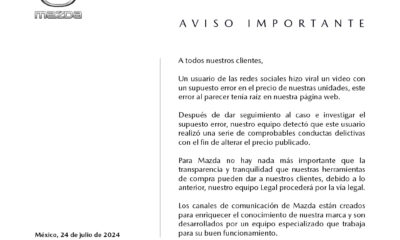
Intento de Compra Fraudulenta en Sitio Web de Mazda Desencadena Acción Legal
-

 Noticias2 años ago
Los Impuestos al Comprar un Auto en México: ¿Una Carga Innecesaria o Una Contribución Justa?